

High blood pressure, also known as hypertension, is a common health problem that affects millions of people worldwide. Hypertension is often called “the silent killer” because generally it has no any symptoms until major complications develop (Mazhar, Rafi & Noreen 2023). Many people live with high blood pressure without knowing it, yet it can cause serious damage to the body if left untreated. This article explains what blood pressure is, what causes high blood pressure, its effects on the body, and how it can be controlled.
What Is High Blood Pressure?
Blood pressure refers to the force of blood pushing against the walls of the blood vessels as the heart pumps blood around the body. High blood pressure, also known as hypertension, is blood pressure that is consistently higher than what is considered normal (Desai, 2020). The heart is a strong muscular organ, about the size of a clenched fist, located in the chest. Its main function is to pump blood through blood vessels so that oxygen and nutrients can reach all parts of the body and waste products can be removed.
Blood flows through a network of blood vessels, including arteries and veins. When the heart pumps harder or when blood vessels become narrow, the pressure inside the vessels increases.
Understanding Blood Pressure Using a Simple Example

Blood pressure can be compared to watering plants with a hose pipe. To water a small garden, you need less pressure. However, watering a large farm requires higher pressure. If water does not reach distant plants, one may increase the pressure by tightening the tap or covering part of the hose with a finger.
In the same way, blood pressure increases when:
- More blood flows through the vessels, or
- Blood vessels become narrow or blocked
Think of it when increasing pressure of a bicycle tire using a pump. The pump gets pulled up then pushed downwards to increase the pressure inside the tire, this goes on until the pressure is enough. Same with the heart, when this happens, the heart must work harder to pump blood, leading to high blood pressure.
Normal vs High Blood Pressure
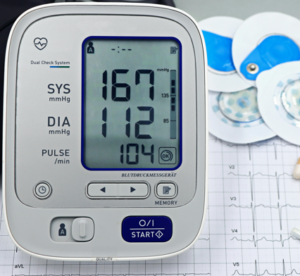
There are 2 types of blood pressure measures: systolic and diastolic. Systolic pressure (top number) is the pressure in the arteries when the heart beats, while Diastolic pressure (bottom number) is the pressure in the arteries when the heart rests (Desai, 2020).
Normal systolic blood pressure is less than 120 millimetres of mercury (mm Hg), and normal diastolic blood pressure is less than80 mm Hg, together described as 120/80 mm Hg (Desai, 2020). A reading consistently above 120/80 mmHg may indicate high blood pressure and should not be ignored. Uncontrolled high blood pressure over long periods of time can lead to serious medical conditions such as heart failure or heart attack, stroke, vision problems, and kidney disease.
What Causes High Blood Pressure?
Several lifestyle and health factors can lead to high blood pressure, including:
- Family history and age
Risk of developing hypertension is strongly influenced by family history and age. A positive family history of hyper-tension is a risk factor for the development of hypertension, and it is well known that risk for hypertension increases as we age (Kannel, 1996).
- Excess Salt Intake
Many people add salt to food before tasting it. Too much salt causes the body to retain water, increasing blood volume and raising blood pressure.
- Lack of Physical Exercise
Regular exercise keeps the heart strong and helps maintain normal blood pressure. A sedentary lifestyle increases the risk of hypertension.
- Fatty Foods and Low Vegetable Intake
Eating too much fatty food can cause fat to build up in blood vessels, making them narrow. Narrow vessels increase blood pressure. A diet low in vegetables also reduces protective nutrients.
- Alcohol Consumption and Smoking
Alcohol and smoking damage blood vessels and force the heart to work harder, leading to increased blood pressure.
- Stress
In addition to lifestyle behaviours known to be associated within creased risk for hypertension (e.g., consuming a high salt diet; excessive alcohol consumption; being overweight; and low engagement in physical activity), psychological factors have long been suspected of influencing blood pressure. Foremost among these factors is evidence that chronic exposure to stress is linked with an increased risk of developing hypertension (Rutledge and Hogan, 2002) Evidence that stress is associated with elevated blood pressures comes from numerous sources including the literature on major life events, occupational stress, and stressful living circumstances, including low socioeconomic status(SES), marital stress, and exposure to discrimination (Spruill,2010).
- Obesity
Excess body weight puts extra pressure on the heart and blood vessels.
Effects of High Blood Pressure on the Body
If not controlled, high blood pressure can cause serious health problems:
Heart Problems
The heart enlarges because it overworks, which can lead to heart failure and constant fatigue.
Brain Damage
High blood pressure increases the risk of stroke and can affect memory and concentration.
Kidney Damage
The kidneys filter blood. High blood pressure damages these filters, leading to kidney failure over time.
High blood pressure is a silent but dangerous condition. Understanding its causes and effects is the first step toward prevention. By reducing salt intake, exercising regularly, eating healthy foods, managing stress, and avoiding smoking and excessive alcohol, blood pressure can be controlled naturally. Regular blood pressure checks are essential for early detection and better health.
References
Desai, A. (2020). High Blood Pressure. JAMA. 324. 1254-1255. 10.1001/jama.2020.11289.
Kannel, W.B., 1996. Blood pressure as a cardiovascular risk factor: Prevention and treatment. Journal of the American Medical Association 275, 1571–1576.
Mazhar, S & Rafi, U & Noreen, A. (2023). Hypertension: Causes, Symptoms, Treatment and Prevention: Hypertension: Treatment and Prevention. Pakistan Bio Medical Journal. 02-07. 10.54393/pbmj.v6i04.858.
Rutledge, T., Hogan, B.E., 2002. A quantitative review of prospective evidence linking psychological factors with hypertension development. Psychosomatic Medicine 64, 758–766.R
Spruill, T.M., 2010. Chronic psychosocial stress and hypertension. Current Hypertension Reports 12, 10–16.T
